
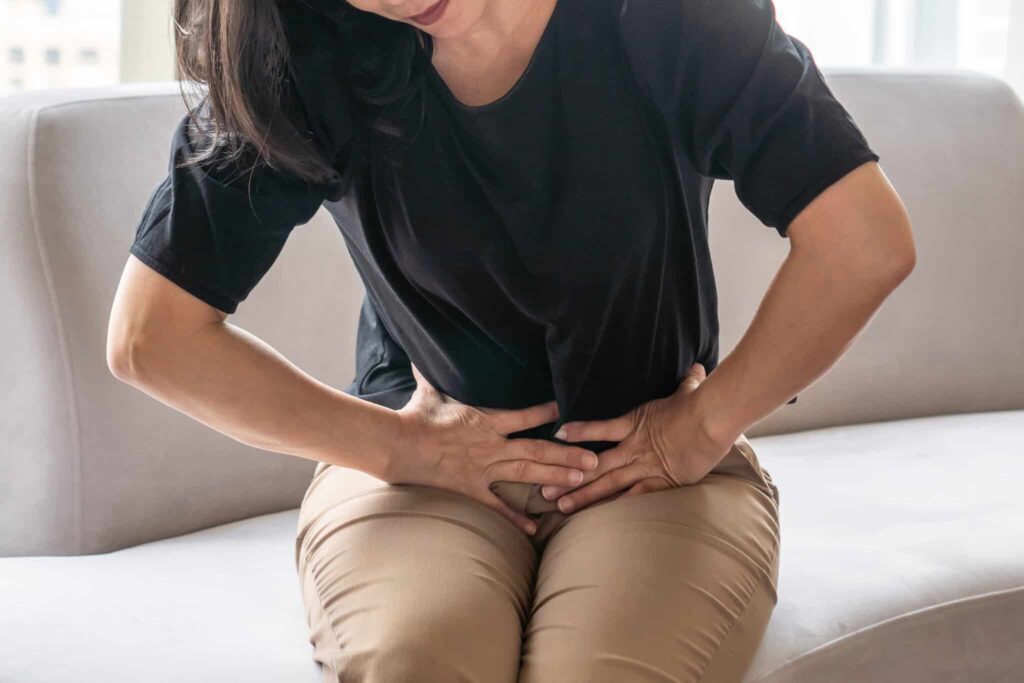
If your periods are unusually heavy, last longer than normal, or you feel pelvic pressure or fullness, it could be related to uterine fibroids. Fibroids are common, noncancerous growths of the uterus that can cause bleeding and “bulk” symptoms (pressure on the bladder or bowel).
Because heavy bleeding and pelvic pain can also have other causes, the most helpful next step is an evaluation. If fibroids are the cause and symptoms are affecting your quality of life, minimally invasive options like Uterine Fibroid Embolization (UFE) may help relieve symptoms while preserving the uterus.
At a glance:
Heavy periods and pelvic pressure are sometimes called “fibroid symptoms,” but they can occur for different reasons. Fibroids can increase bleeding by changing the shape of the uterine cavity or increasing the surface area of the uterine lining. Larger fibroids can also press on the bladder or bowel, causing frequent urination, constipation, or a feeling of fullness.
Heavy bleeding and pelvic pain can also be caused by other conditions (for example, hormonal changes, adenomyosis, polyps, endometriosis, thyroid issues, or bleeding disorders). That’s why confirming the diagnosis with an appropriate evaluation and imaging is important.
We review your symptoms and goals, and we confirm whether fibroids are present and which treatment pathway makes the most sense. Evaluation often includes pelvic imaging (such as ultrasound and, in some cases, MRI) and may include lab work based on your symptoms.
If fibroid symptoms are affecting your work, sleep, confidence, or daily comfort, the next step is to see whether you are a candidate for UFE. UFE is a minimally invasive, image-guided procedure designed to shrink fibroids over time by reducing blood flow to them.
Medical information on this page is for general education and is not a substitute for personalized medical advice. If you believe you have an emergency, call 911.
Fibroids are a common cause, but not the only cause. Imaging (often ultrasound, sometimes MRI) helps confirm whether fibroids are present and whether they match your symptoms.
Fibroids are usually benign (noncancerous), but they can cause significant symptoms such as heavy bleeding, anemia, and pelvic pressure. Evaluation helps determine the best next step.
UFE is a minimally invasive, image-guided procedure that reduces blood flow to fibroids so they shrink over time. It is uterus-sparing and is an option for selected patients.
Many patients have improvement in heavy bleeding, but outcomes vary and depend on individual factors. Your consultation will review realistic expectations for your situation.
Pregnancy goals are important to discuss. Some patients with future fertility goals may consider other options (such as myomectomy). Your care team can review which pathway aligns with your goals.
Many patients go home the same day. Recovery varies, but many return to light activity within several days and normal routines within about 1–2 weeks. Your provider will review expected timelines.