
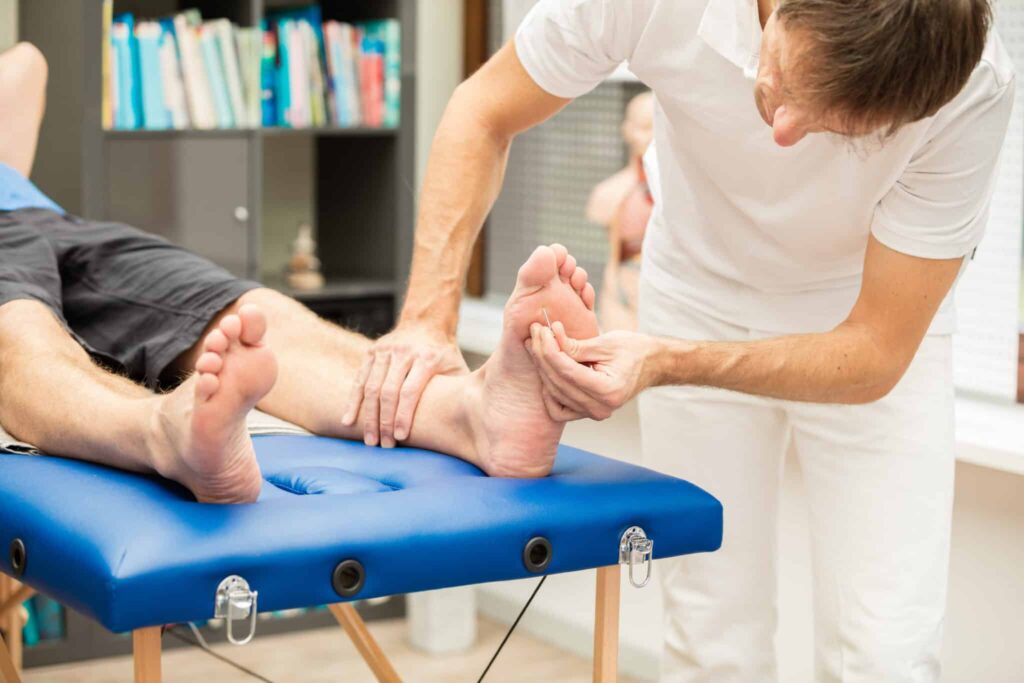
Diabetic neuropathy can cause burning pain, tingling, numbness, and reduced sensation—most often in the feet. Treatment is usually a plan, not a single fix: it focuses on controlling diabetes-related drivers, improving comfort, and reducing complications like foot ulcers.
At MINT, we evaluate symptoms and also consider whether circulation problems (PAD) may be contributing—especially when there are wounds, cold toes, or walking-related leg pain.
At a glance:
Over time, elevated blood sugar can damage nerves and the small blood vessels that support them. Diabetes can also impact circulation, which is why neuropathy and PAD sometimes coexist.
We start by understanding your symptom pattern and risk factors, reviewing your medical history, and checking for warning signs such as wounds or significant circulation changes.
If symptoms suggest reduced blood flow, we may recommend circulation testing and imaging to evaluate for PAD.
Your plan depends on what’s driving your symptoms and your goals. Common components include the following categories:
Diabetes can affect both nerves and arteries. When PAD is present, it can worsen pain, limit walking ability, and delay wound healing. Identifying PAD early can be important for long-term limb health.
We evaluate neuropathy-like symptoms and focus on identifying treatable drivers, including circulation issues (PAD) when present. Many patients benefit from coordinated care across specialties.
For selected patients with painful diabetic neuropathy, neuromodulation such as spinal cord stimulation may be considered with an appropriate specialist. An evaluation determines if that pathway fits your situation.
Circulation issues can worsen pain, coldness, and wound healing. Neuropathy and PAD can coexist, especially in diabetes.
Daily foot checks, protective footwear, prompt attention to cuts/blisters, and diabetes control are key steps.
Urgent signs include a non-healing wound with infection signs, sudden severe pain, sudden cold/pale/blue foot, or blackened tissue.